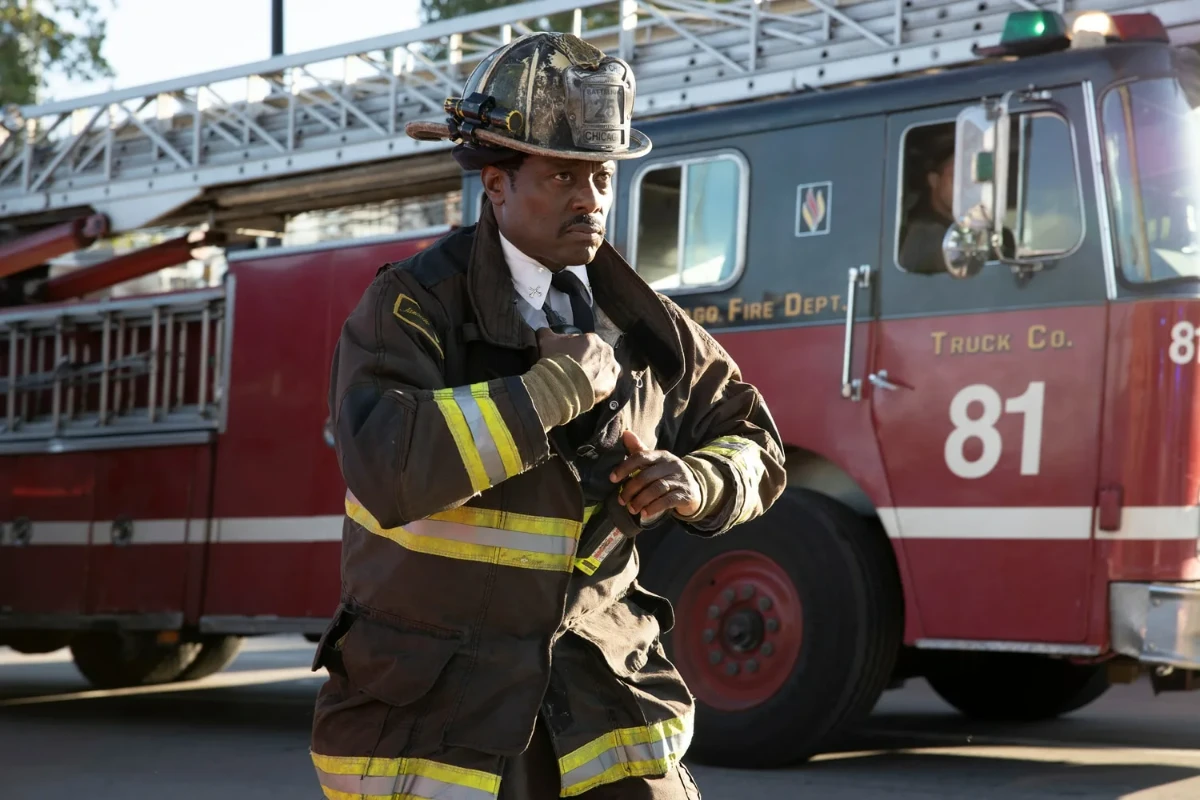
Wallace Boden’s Return Should Have Been Great News… Instead, Chicago Fire fans are asking one chilling question
Wallace Boden’s Return Should Have Been Great News… Instead, Chicago Fire fans are asking one chilling question: What does he know about Kelly Severide?
When Wallace Boden walked back into Firehouse 51, the air should have been thick with celebration. The man who had shaped the house for more than a decade, who had stood as its moral compass through infernos both literal and emotional, was home. Viewers expected handshakes that lingered too long, laughter cracking through the tension of recent months, and the quiet reassurance that some anchors never truly drift. Instead, the reunion carried an undercurrent that felt heavier than any collapsed roof.
The camera lingered on Boden’s face as his eyes found Severide across the apparatus floor. In that single, wordless beat, longtime fans felt the temperature drop. The pauses stretched. The half-smiles never quite reached their eyes. And suddenly the internet was on fire with one question repeated across timelines and comment sections: What does Boden know that the rest of us don’t?
Boden has always been the one who sees the fractures before they become breaks. Long before Severide himself could name the darkness, Boden recognized the restless hunger in the younger man’s eyes—the same hunger that once drove him toward the bottle, toward reckless risks on the job, toward the ghost of a father who could never quite stay. Boden never lectured from a place of superiority. He simply stood in the doorway of the locker room at two in the morning, offering presence rather than platitudes. “You don’t have to carry it alone, Lieutenant,” he would say, and somehow the title felt less like rank and more like a lifeline.
That history now casts every glance between them in new light. When Boden returned as First Deputy Commissioner for the post-mortem investigation into the catastrophic call that nearly claimed a life, the official reason was procedural. Yet the way Boden watched Severide—measuring, remembering, bracing—suggested something far more personal had traveled back with him.
Severide, for his part, has spent years perfecting the art of the unbreakable exterior. The swagger, the quick grin, the willingness to run into the blaze others would flee. But beneath the turnout gear lies a man who has buried too many pieces of himself. The loss of his father Benny left a wound that never fully closed. The responsibilities of interim command, the scrutiny of a new and unforgiving Battalion Chief in Andre Hopkins, and the quiet fear that he might not be enough for the family he has built at 51—all of it presses against his ribs like smoke.
In the moments after Boden’s arrival, one could almost see the calculation flickering behind Severide’s eyes: How much does he already know? How much can I keep buried before it spills out and takes the house down with it?
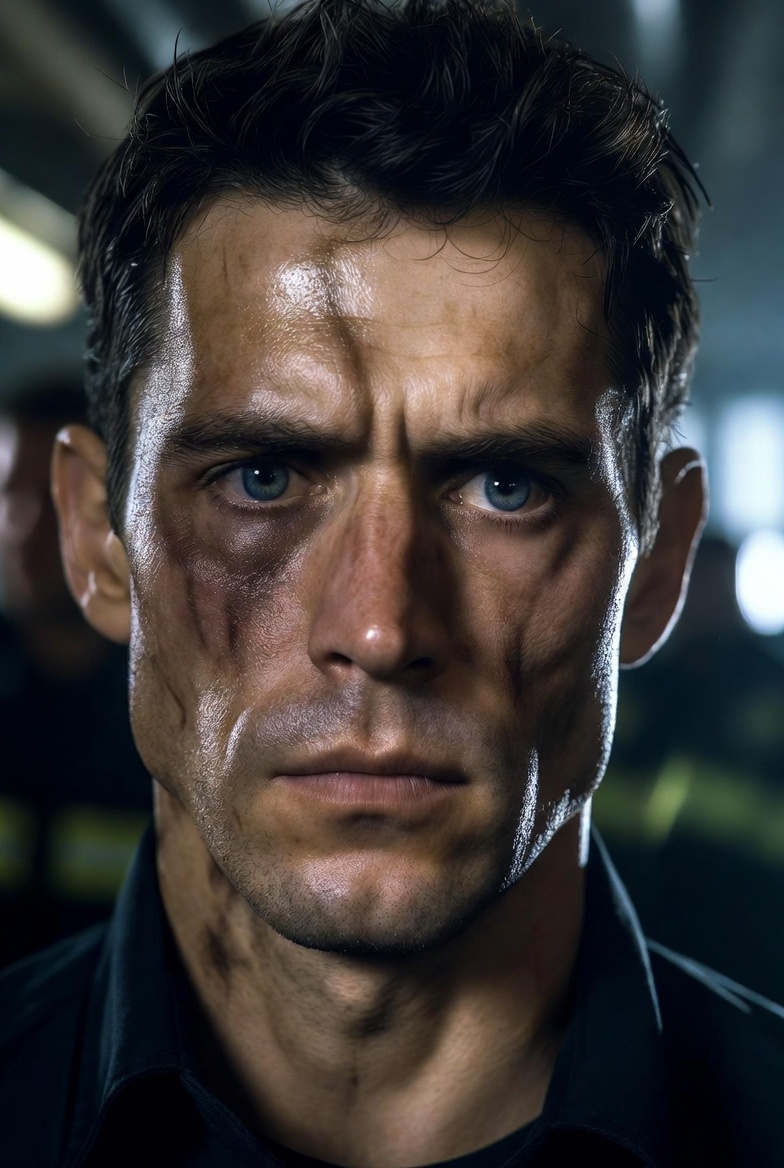

The genius of Chicago Fire has always lived in these unspoken languages—the language of men and women who run toward danger together and therefore know one another’s silences better than their words. Boden and Severide have shared that language for years. When Boden asks a simple question about the sequence of events on the fatal call, his voice carries the weight of every previous conversation they have ever had in private. Severide’s answer is crisp, professional, correct. But the slight delay before he speaks, the way his shoulders tighten almost imperceptibly, tells Boden everything the report never will.
What secret is Severide protecting? Fans have spun theories with the feverish creativity only true devotion can fuel. Some believe Severide received medical news he has chosen to hide so the team will not treat him differently—perhaps the cumulative toll of years inside burning buildings finally demanding its price. Others whisper of a deeper fracture: that Severide has begun to question whether he can still lead, whether the weight of command is slowly eroding the very instincts that once made him legendary. Still others point to the complicated presence of his half-brother Jack Damon and wonder whether Severide is carrying guilt over choices made to protect family that could one day explode across the entire district.
Whatever the truth, Boden’s presence makes the possibility of concealment feel suddenly impossible. He has seen Severide at his lowest—after the death of fellow firefighters, after the collapse of relationships, after nights when the only thing standing between Severide and the abyss was Boden’s steady voice on the other end of a phone. That history creates a bond thicker than blood and more dangerous than any secret. Because if Boden has returned not merely to investigate procedure but to confront the man he once called “son” in every way that matters, then the storm gathering over Firehouse 51 is no longer professional. It is personal. And personal storms have a way of burning hottest.
Consider the internal calculus running through Severide’s mind in those first hours. Every time Boden speaks to another member of 51, Severide feels the invisible thread between them pull tighter. He watches Boden listen to Stella Kidd describe the rescue, watches the way Boden’s gaze occasionally flicks back to him as if cross-referencing every word against some private ledger only the two of them share. Severide’s thoughts race: He’s not just here for the report. He’s here because he knows I’m slipping. He’s here because he’s afraid I won’t ask for help until it’s too late.
Boden, meanwhile, carries his own quiet torment. He left 51 to protect the larger department, yet the house never left him. Returning under the banner of investigation feels like a betrayal of the very trust he spent years building. Every question he poses is a scalpel. Every silence he allows is an invitation. He studies Severide the way a father studies a child who has learned to hide bruises. The love is unchanged. The fear that love might not be enough has only grown sharper with time and distance.


The theories multiplying online are not mere speculation; they are the audience’s way of processing the same dread the characters cannot yet voice. If Boden’s knowledge concerns only the mechanics of that disastrous call, the tension would dissipate once the report is filed. But the camera refuses to let the tension dissipate. It lingers on Boden’s face after Severide leaves the room. It catches the flicker of something deeper—pity, perhaps, or the terrible certainty that the man he mentored is once again walking toward an edge no one else can see.
What would it mean for Firehouse 51 if that edge is real? The house has survived explosions, line-of-duty deaths, and leadership upheavals. It has survived because its members have always been willing to bleed for one another. Yet a secret carried alone by its strongest lieutenant threatens something more fundamental than any external threat. It threatens the covenant of honesty that allows them to run into fire together without hesitation. If Severide is breaking and Boden is the only one who sees the cracks, then the question is no longer what Boden knows. The question becomes whether Boden can reach him before the breaking point arrives—and whether Severide will finally allow himself to be reached
In the end, Boden’s return was never going to be simple nostalgia. It was always going to be a reckoning. Because the man who once saved Severide from himself has returned at the precise moment Severide may need saving again. The chills racing down viewers’ spines are not manufactured drama. They are the recognition of something true: in a world where every alarm could be the last, the most dangerous fires are often the ones burning inside the people we trust most to run toward the flames.
Chicago Fire has always understood that the real heroism is not the dramatic rescue. It is the quiet, daily choice to see one another fully—even when what we see terrifies us. Boden sees Severide. The only question left is whether Severide can bear to be seen.
The storm is coming. And this time, the man who has always stood in the doorway may be the only one who can keep the house from burning down from the inside.