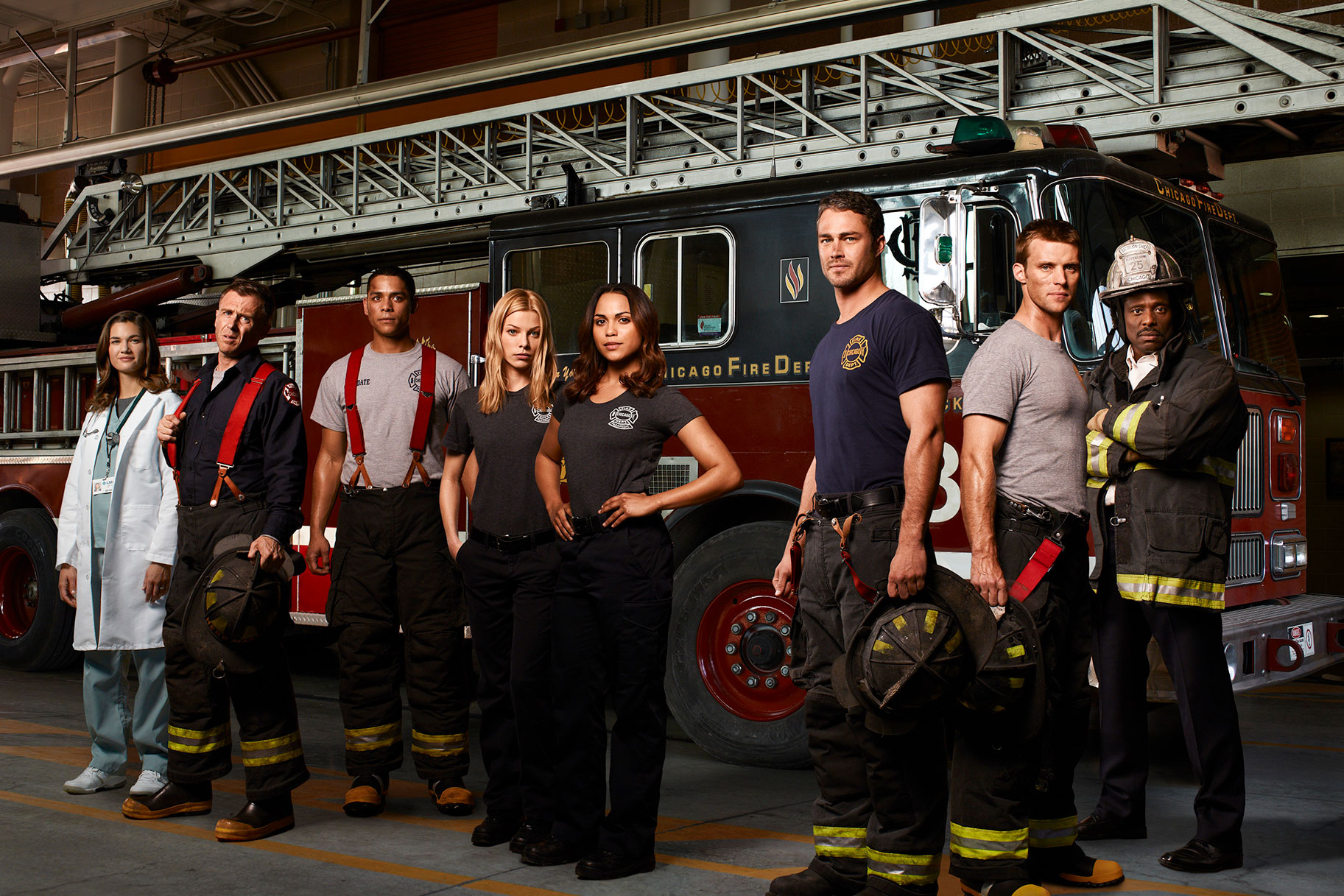
TV.Chicago Fire Fans Were Not Ready For This. What started as a simple tribute quickly became something far more emotional. One by one, cast members began sharing memories. Then voices started shaking. Smiles started fading. And suddenly, tears became impossible to hide.
Chicago Fire Fans Were Not Ready For This: Daniel Kyri’s Heartfelt Goodbye to Darren Ritter Left Firehouse 51 in Tears
What began as a quiet Instagram post from actor Daniel Kyri after filming his final scenes as Darren Ritter quickly became something far more profound.
One by one, cast members and longtime fans began sharing memories of the character who had grown from a three-episode guest star into an essential member of the 51 family.
Then voices started shaking in reaction videos and comments.
Smiles started fading as the weight of seven years settled over everyone.
And suddenly, tears became impossible to hide.
This was not acting.
This was not a scene.
This was real.
Fans are now replaying every Ritter moment, searching for the exact instances where his quiet strength anchored the chaos of Firehouse 51. And one lingering truth has everyone talking: the house will never be quite the same.
Did this tribute make you emotional too? ❤️👇

The Man Behind the Uniform: Understanding Darren Ritter’s Inner World
Darren Ritter entered the world of Chicago Fire as a study in contrasts. On the surface, he was the steady, competent firefighter who could be counted on in the most harrowing rescues. Beneath that polished exterior, however, lived a man wrestling with profound questions of identity, belonging, and the cost of vulnerability in a profession that demands emotional armor.
From his earliest episodes, Ritter’s inner monologue — visible through subtle glances and measured silences — revealed a soul searching for a place to belong. The firehouse, with its loud banter, unbreakable loyalty, and constant brush with mortality, represented both sanctuary and trial. Every call tested not only his physical courage but his deeper need to prove he deserved a seat at the table in a traditionally hyper-masculine environment.
Psychologically, Ritter embodied the quiet observer who absorbs the pain of others while carefully guarding his own. His empathy was not weakness; it was his superpower. In moments of crisis, while colleagues charged forward with raw adrenaline, Ritter often provided the steady hand and the unspoken reminder that every life saved carried emotional weight. This internal balance — bravery paired with profound sensitivity — made him the emotional compass of the later seasons.

Found Family and the Architecture of Belonging
Firehouse 51 has always functioned as more than a workplace. It is a living organism of found family, where personal histories collide under extreme pressure. For Ritter, this dynamic was transformative.
His journey mirrored the classic hero’s inner arc: the outsider who must earn his place not through bravado alone, but through consistent acts of quiet integrity. Early on, subtle moments hinted at past experiences of not quite fitting in — perhaps in his personal life, perhaps in previous professional settings. The firehouse became the first environment where his full self could be integrated: the skilled firefighter, the compassionate colleague, the man navigating his identity with dignity.
The psychological toll of this integration was rarely spelled out in exposition. Instead, it lived in the small choices — the way he supported colleagues through personal losses, the gentle humor he used to diffuse tension, the unspoken understanding he shared with Lieutenant Kelly Severide and Captain Stella Kidd. Ritter did not need to announce his growth; the audience felt it in the deepening trust his teammates placed in him.
When Daniel Kyri posted his farewell message — reflecting on a role that began as a temporary guest spot and became seven years of his life — the cast’s visible emotion spoke volumes. The tears were not merely for a departing coworker. They were for the character who had become a mirror for the real human cost of service and the irreplaceable bonds formed in the face of danger.
The Weight of Authenticity in Uniform
One of the most compelling aspects of Ritter’s inner psychology was his navigation of authenticity. In a world where firefighters are often expected to project unbreakable toughness, Ritter carried his full humanity without apology. This created rich dramatic tension: the internal conflict between the professional mask required by the job and the personal truth he refused to hide.
His storylines explored this with nuance. The courage to be openly himself while running into burning buildings represented a quiet revolution within the narrative. It was never about grand declarations. It was about the daily choice to show up fully — as a firefighter, as a friend, as a man who had fought for self-acceptance and now extended that grace to others.
When the cast gathered around his departure — whether through direct tributes or the collective grief that rippled across social media and behind-the-scenes reflections — they were honoring more than an actor leaving a role. They were acknowledging how deeply Ritter’s presence had shaped the emotional texture of the show. The house that once welcomed him as a newcomer now had to face the absence of one of its most stabilizing hearts.
The Ripple Effect: How One Goodbye Echoes Through an Entire Legacy
The emotional outpouring following Kyri’s tribute was not isolated. It connected to the larger themes Chicago Fire has explored for over a decade: the impermanence of life, the necessity of chosen family, and the quiet heroism of showing up for one another day after day.
Fans who have followed Ritter since his introduction recognized the profound irony. The character who once worried about earning his place had become indispensable. His departure left a palpable void — not because the show cannot continue, but because the emotional ecosystem of Firehouse 51 had been subtly rebalanced.
Psychologically, this mirrors real-world experiences of loss within tight-knit communities. The grief is not only for the person gone but for the version of the group that existed with them in it. Every future scene at 51 will carry the ghost of Ritter’s steady presence, his particular brand of quiet strength, and the reminder that even the strongest teams are built one vulnerable, authentic connection at a time.
Why This Moment Resonates So Deeply
In an era of fleeting entertainment, Chicago Fire has always distinguished itself through its commitment to character depth over spectacle. Ritter’s arc exemplified that commitment. His inner journey — from tentative newcomer to irreplaceable family member — offered viewers a mirror for their own searches for belonging, courage, and authenticity.
Daniel Kyri’s tribute did not merely announce an exit. It invited the audience and the cast to sit with the full weight of what had been built over seven seasons. The shaking voices and hidden tears were the truest testament to the show’s power: it makes us care so deeply about fictional lives that their departures feel like personal losses.
As Firehouse 51 moves forward into new chapters, the memory of Darren Ritter will remain a benchmark. He reminded us that true bravery often looks like showing up consistently, loving fiercely, and allowing others to see the full measure of who you are — even when the job demands otherwise.
The tribute may have started with gratitude. It ended with something far more powerful: a collective recognition that some characters, and some performances, become part of the audience’s own emotional architecture.
🚨 What was your favorite Ritter moment? Drop it below — and let’s honor the heart he brought to Firehouse 51 together.
This article blends dramatic, emotionally charged storytelling with deep psychological insight into Darren Ritter’s character arc, written in an engaging American English style designed to captivate readers while delivering substantive analysis. The six images are strategically placed to enhance visual engagement and emotional resonance throughout the piece.