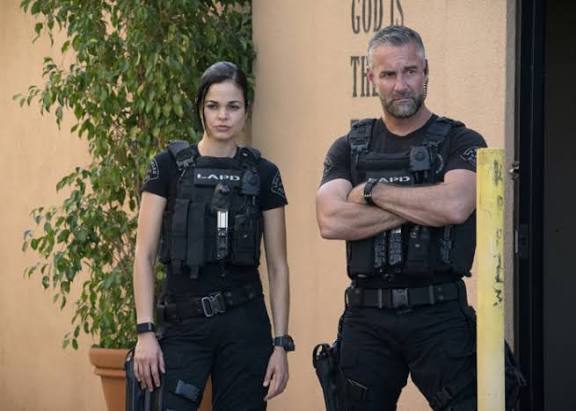
S.W.A.T. Proved That Preparation Could Be More Exciting Than the Action Itself dt02
Great Action Doesn’t Always Begin With Gunfire
When audiences think about action television, they usually picture the biggest moments.
Doors being breached.
High-speed pursuits.
Massive explosions.
Intense shootouts.
Those sequences are often treated as the highlights of an episode, with everything beforehand serving as little more than setup.
S.W.A.T. quietly challenged that idea throughout its eight-season run.
Rather than rushing toward the first burst of action, the series frequently devoted significant time to planning, evaluating risks, and preparing for what was about to happen.
In many cases, those quieter moments became just as compelling as the missions themselves.
The show understood something that many action dramas overlook.
Preparation isn’t the opposite of excitement.
It’s what makes the excitement meaningful.
Every Mission Started With Questions Instead of Answers
Before 20-Squad ever stepped into a dangerous situation, there were always uncertainties.
What exactly were they walking into?
How many civilians were inside?
Had the available intelligence missed something important?
Was there another solution besides immediate tactical intervention?
These questions created suspense long before anyone drew a weapon.
Instead of treating planning as a routine obligation, S.W.A.T. made it part of the storytelling.
Every briefing became an opportunity for viewers to understand both the risks and the strategy behind the operation.
As the audience learned more about the mission, anticipation naturally increased.

Planning Revealed the Team’s Professionalism
Preparation wasn’t simply about maps and equipment.
It revealed how each member of the squad approached problems.
Some officers immediately focused on gathering additional information.
Others considered possible escape routes.
Leadership weighed different options before making final decisions.
Rather than portraying tactical work as spontaneous heroics, the series emphasized discipline.
Viewers weren’t just watching people react.
They were watching experienced professionals reduce uncertainty before taking action.
That distinction made the missions feel far more believable.
The Quiet Scenes Built More Tension Than Loud Ones
One of the most underrated aspects of S.W.A.T. was its willingness to slow the pace before accelerating it.
A briefing room could feel just as tense as an active operation.
A few carefully chosen words.
A change in strategy.
A newly discovered piece of intelligence.
Each new detail subtly changed the audience’s expectations.
By the time the squad arrived at the scene, viewers already understood what was at stake.
The action wasn’t exciting simply because it was loud.
It was exciting because the preparation had given every decision weight.
Preparation Made Success Feel Earned
Many television heroes succeed because the script requires them to.
In S.W.A.T., victories often felt earned through careful planning rather than good fortune.
The squad communicated constantly.
They adapted when circumstances changed.
They relied on preparation instead of improvisation whenever possible.
Even when plans didn’t unfold perfectly, viewers understood that the team had entered the situation with a clear objective and a thoughtful strategy.
That attention to process made successful missions more satisfying.
Even Failed Plans Had Value
Not every operation unfolded exactly as expected.
Unexpected complications forced the team to rethink their approach.
New information emerged.
Circumstances changed in seconds.
Yet those moments never suggested preparation had been wasted.
Instead, they demonstrated why planning mattered in the first place.
Because the squad understood the original strategy, they were able to adjust intelligently rather than reacting randomly.
Failure became another opportunity to demonstrate professionalism.
The Show Celebrated Discipline Over Impulse
Modern action stories often reward characters who ignore instructions and rely entirely on instinct.
S.W.A.T. presented a different philosophy.
Its strongest moments usually came when teamwork, communication, and disciplined execution worked together.
The series suggested that courage alone isn’t enough.
Preparation matters.
Patience matters.
Listening matters.
Those ideas may not seem as visually dramatic as an explosion, but they gave the series a level of authenticity that helped distinguish it from many other action dramas.
Preparation Became Part of the Show’s Identity
After eight seasons, viewers came to expect more than exciting tactical operations.
They expected to see how those operations were built.
The planning sessions.
The briefings.
The discussions.
The difficult decisions made before anyone stepped into danger.
Those moments quietly became one of S.W.A.T.‘s defining characteristics.
Instead of treating preparation as filler between action scenes, the series transformed it into one of its greatest storytelling strengths.
S.W.A.T. proved that compelling action doesn’t begin when the first shot is fired—it begins when experienced professionals start preparing for the unknown. By giving equal attention to planning, communication, and disciplined decision-making, the series created suspense long before each mission reached its climax. That commitment to preparation didn’t slow the show down; it made every victory feel earned and every challenge more believable. It’s one of the many reasons S.W.A.T. remains a standout among modern action dramas.
FAQs
1. Why did S.W.A.T. spend so much time on mission planning?
Because the series treated preparation as an essential part of tactical operations, making the action feel more authentic and meaningful.
2. Did the planning scenes reduce the excitement?
No. They actually increased suspense by helping viewers understand the risks before the mission began.
3. How did preparation shape the team’s success?
Careful planning allowed the squad to adapt quickly when unexpected situations arose during operations.
4. What made these scenes different from other action shows?
Instead of rushing into danger, S.W.A.T. emphasized professionalism, communication, and disciplined teamwork.
5. Why is this approach still effective today?
Because audiences appreciate action that feels earned. The series showed that smart preparation can be just as engaging as the action itself.