
Commissioner Reagan Faces Off Against The District Attorney’s Office In One Of Blue Bloods’ Most Explosive Family Conflicts
Few television dramas have mastered the balance between family tension and professional conflict quite like Blue Bloods. Throughout its fourteen-season run, the CBS hit repeatedly demonstrated that some of the most intense battles weren’t fought on the streets of New York City—they unfolded within the Reagan family itself.
One particularly memorable storyline placed Police Commissioner Frank Reagan directly at odds with the District Attorney’s Office, creating a conflict that tested loyalties, challenged long-held beliefs, and forced members of the Reagan family to confront an uncomfortable reality: sometimes justice looks very different depending on which side of the courtroom you’re standing on.
Featuring powerhouse performances from Tom Selleck and Bridget Moynahan, the episode remains a standout example of why Blue Bloods resonated with audiences for so many years. More than a simple disagreement between law enforcement agencies, the confrontation became a deeply personal struggle that highlighted the show’s greatest strength—its willingness to explore complex moral issues without offering easy answers.

A Clash Between Two Powerful Institutions
At the heart of the storyline lies a familiar but endlessly compelling conflict.
The New York Police Department and the District Attorney’s Office may share the same goal—seeking justice—but their methods often differ dramatically.
For Commissioner Frank Reagan, the responsibility is straightforward in principle, if not in practice. His officers risk their lives gathering evidence, tracking suspects, and protecting the public. From Frank’s perspective, the work performed by law enforcement deserves trust and support.
The District Attorney’s Office, however, operates under a different mandate.
Prosecutors are responsible for ensuring cases meet legal standards before moving forward. That means questioning evidence, challenging police procedures, and sometimes declining to pursue charges when they believe a case cannot withstand scrutiny.
When those philosophies collide, tension becomes inevitable.
Blue Bloods thrives in precisely that space.
Rather than presenting either side as completely right or completely wrong, the series uses the conflict to examine how different interpretations of justice can create friction even among people working toward the same objective.
Frank Reagan Finds Himself Under Pressure
As the dispute intensifies, Frank Reagan becomes the central figure in a rapidly escalating controversy.
Throughout the series, Frank consistently faced pressure from politicians, community leaders, journalists, and internal department critics. Yet some of his most difficult moments occurred when challenges emerged from within the justice system itself.
In this storyline, Frank is forced to defend both his officers and the institution he leads.
The conflict threatens more than a single investigation.
Questions begin emerging about accountability, public trust, and whether law enforcement officials have crossed ethical boundaries in pursuit of results.
For Frank, the issue becomes deeply personal.
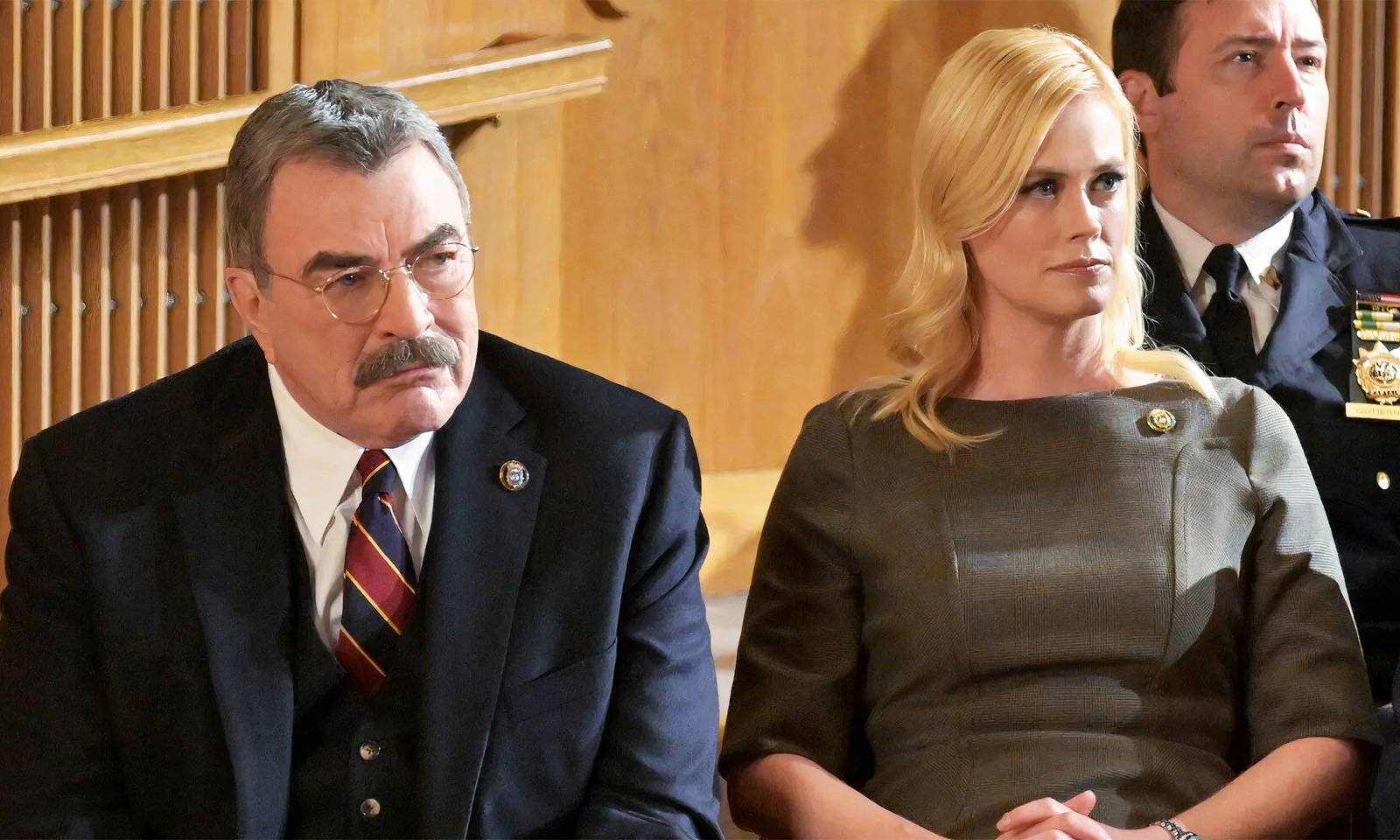
His leadership style has always been rooted in integrity. He expects officers to uphold the law while maintaining the public’s confidence.
When that reputation is called into question, the commissioner must decide how far he is willing to go to protect his department.
Tom Selleck delivers a measured yet powerful performance, portraying a leader caught between loyalty to his officers and responsibility to the public he serves.
Erin Reagan Caught In The Middle
No one feels the impact of the conflict more intensely than Erin Reagan.
As a senior prosecutor within the District Attorney’s Office, Erin frequently finds herself balancing professional obligations against family relationships.
That dynamic has long been one of Blue Bloods’ most effective storytelling tools.
Unlike many television dramas that separate workplace conflicts from personal lives, Blue Bloods deliberately intertwines them.
Erin’s position places her directly opposite her father during the dispute.
While Frank views the issue through the lens of policing, Erin approaches it from a legal perspective. Her responsibility is not to protect the NYPD but to ensure justice is pursued correctly and fairly.
The resulting tension creates some of the episode’s strongest scenes.
Neither character is portrayed as unreasonable.
Instead, both genuinely believe they are defending principles that matter.
That complexity elevates the conflict beyond a simple family argument.
It becomes a debate about the very nature of justice itself.
A Family Divided By Duty
One of Blue Bloods’ defining characteristics is its ability to transform institutional disputes into personal drama.
The disagreement between Frank and Erin inevitably spills into family life, creating uncomfortable conversations and emotional confrontations.
Members of the Reagan family find themselves pulled in different directions.
Some sympathize with Frank’s concerns about supporting police officers.
Others understand Erin’s commitment to legal accountability.
The beauty of the storyline lies in its refusal to provide a clear villain.
Every character operates from a place of conviction.
As a result, viewers are encouraged to consider multiple perspectives rather than simply choosing sides.
This approach has long distinguished Blue Bloods from more conventional procedural dramas.
The series understands that real-world conflicts rarely fit neatly into categories of right and wrong.
The Famous Family Dinner Takes Center Stage
As with many of the show’s most memorable episodes, the emotional climax arrives around the Reagan family dinner table.
For fourteen seasons, these scenes served as the heart of Blue Bloods.
The weekly gatherings allowed characters to debate difficult issues while reinforcing the importance of family unity.
This particular dinner proves especially compelling.
Professional disagreements that might remain controlled in an office environment suddenly become deeply personal when family relationships enter the equation.
The conversation is passionate.
At times, it becomes uncomfortable.
Yet beneath the disagreements lies mutual respect.
Frank and Erin may find themselves on opposite sides of the issue, but their shared commitment to justice remains evident.
The scene perfectly captures what made Blue Bloods unique.
Viewers are not simply watching a procedural drama.
They are witnessing a family struggle to reconcile differing beliefs while maintaining their bond.
Why The Storyline Still Resonates
Years after it first aired, the conflict between Commissioner Reagan and the District Attorney’s Office remains one of the franchise’s most relevant storylines.
The themes explored in the episode continue to resonate because they reflect real debates surrounding law enforcement, accountability, and public trust.
Blue Bloods never positioned itself as a political series.
However, it consistently examined the challenges facing institutions responsible for maintaining justice.
This storyline exemplifies that approach.
Rather than offering simplistic solutions, the episode acknowledges the complexity of balancing public safety with legal oversight.
That willingness to engage with difficult questions helped establish Blue Bloods as more than a standard crime drama.
Tom Selleck And Bridget Moynahan Deliver A Masterclass
Much of the episode’s success can be attributed to the performances of Tom Selleck and Bridget Moynahan.
The actors share a natural chemistry developed over years of portraying father and daughter.
That familiarity allows them to navigate emotionally charged scenes with authenticity and nuance.
Selleck portrays Frank as a leader burdened by responsibility but unwilling to compromise his principles.
Meanwhile, Moynahan brings intelligence, determination, and emotional depth to Erin’s perspective.
Together, they create a conflict that feels believable because neither character appears motivated by ego or personal gain.
Instead, both are fighting for what they sincerely believe is right.
That distinction transforms the storyline into one of Blue Bloods’ strongest dramatic achievements.
A Defining Example Of What Made Blue Bloods Special
Ultimately, the confrontation between Commissioner Reagan and the District Attorney’s Office highlights everything that made Blue Bloods successful.
The episode combines procedural intrigue with emotional storytelling.
It explores complex moral questions without sacrificing entertainment value.
Most importantly, it demonstrates how family relationships can remain strong even when fundamental disagreements emerge.
In a television landscape often dominated by clear heroes and villains, Blue Bloods succeeded because it embraced ambiguity.
Frank Reagan and Erin Reagan stand on opposite sides of the conflict, yet both remain sympathetic.
Both remain committed to justice.
And both remain members of the same family.
That balance is precisely why the series endured for fourteen seasons—and why episodes like this continue to resonate with viewers long after the credits roll.