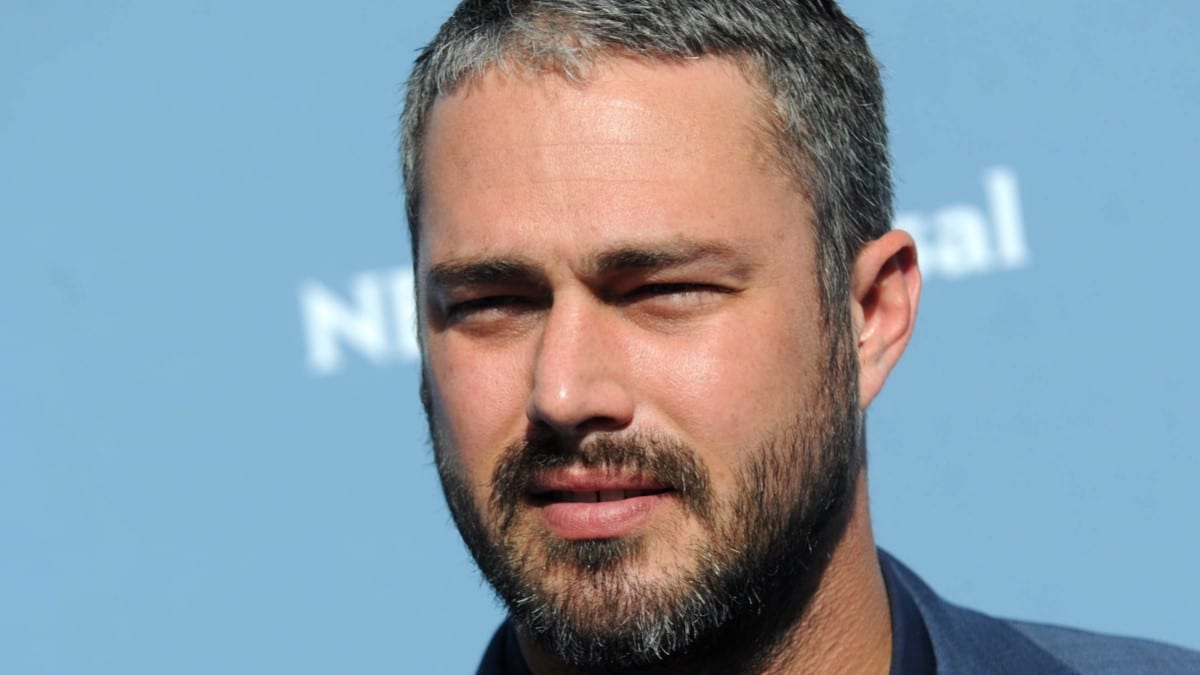
TV.BREAKING: Boden Walks Back Into Firehouse 51… And Fans Instantly Notice Who He Looks For First Nobody expected this. The doors of Firehouse 51 open, conversations stop, and suddenly there he is—Wallace Boden.
THE LOOK THAT SAID EVERYTHING: Why Boden’s First Glance at Severide Has Chicago Fire Fans Questioning Everything They Thought They Knew
Nobody expected the air inside Firehouse 51 to grow this heavy.
The doors opened. Conversations died mid-sentence. Boots stopped scraping across the apparatus floor. And there he stood—Wallace Boden, Deputy Commissioner, back in the house that still carries his name in every beam and every unspoken rule. For a split second it felt like the old days. The father had returned.
Then viewers saw it.
Boden did not scan the room for old friends. He did not check the rigs or greet the new chief. His eyes moved with the precision of a man who has spent a lifetime reading smoke and reading people. They locked onto one figure and stayed there.
Kelly Severide.
The moment lasted no more than three seconds on screen, yet it has already ignited thousands of theories, frame-by-frame breakdowns, and late-night debates across social media. Because in those three seconds, Boden’s face did something rare: it showed fear.
Not the fear of fire. The deeper kind—the fear a father feels when he realizes his child is standing on ground that is about to give way.
![Eamonn Walker's Boden Returned to Chicago Fire After [Spoiler] Almost Died](https://s.yimg.com/ny/api/res/1.2/VeTBbhseslfn4OMx89jZAA--/YXBwaWQ9aGlnaGxhbmRlcjt3PTEyNDI7aD04Mjg7Y2Y9d2VicA--/https://media.zenfs.com/en/nbc_insider_articles_256/50145e49f7489cde02144351f36de009)
The Weight Behind the Uniform
Boden has always carried more than rank. He carries the memory of every firefighter who walked through those doors and did not walk out the same. When he left for the commissioner’s office, he carried the additional burden of knowing that distance does not erase responsibility. It only changes its shape.
In the recent episode “Post-Mortem,” Boden returns under orders to investigate a house fire that collapsed with a firefighter still inside. The circumstances are grim, the questions brutal. Someone will have to answer for decisions made in smoke and adrenaline. Someone’s career—and possibly their sense of self—may not survive the scrutiny.
That is the context. But the look Boden gives Severide suggests the investigation is not the only storm he sees gathering.
Boden has spent more than a decade shaping Severide. He saw the raw talent, the recklessness, the grief that threatened to consume the younger man after Shay’s death. He watched Severide grow from a lieutenant who sometimes acted first and thought later into a leader who now carries the weight of an entire company on his shoulders. Boden knows what that weight does to a soul. He has worn it himself.
So when Boden steps back into 51 and finds Severide first, he is not simply greeting an old colleague. He is performing an instantaneous assessment of a man he helped raise in this job. The slight tightening around Boden’s eyes, the way his shoulders settle as if bracing for impact—these are the micro-expressions of a mentor who already suspects the answers he is about to uncover may cut close to home.
What Severide Carries That No One Else Sees
Severide has always been the one who runs toward the danger others flee. That instinct saved lives, but it has also exacted a toll visible only in the quiet moments when the sirens stop. The show has never shied away from showing us the cost: the sleepless nights, the relationships strained by the job’s unrelenting demands, the survivor’s guilt that lingers long after the flames are out.
In recent seasons, Severide has stepped further into leadership. He is no longer only responsible for Squad 3; he is increasingly the steady hand others look to when the house itself feels adrift. That shift brings new pressures. Every decision now ripples outward. Every call that goes wrong can be traced back to training he oversaw, protocols he endorsed, or a split-second judgment he made under the same smoke that once tested Boden.
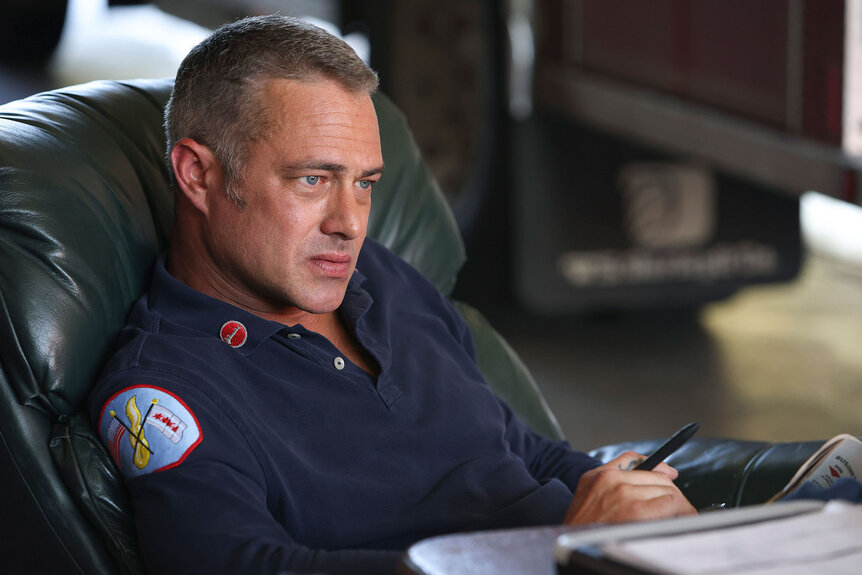
When Boden’s gaze finds him, Severide’s reaction is equally telling. There is recognition. There is respect. And beneath both, there is something harder to name—perhaps the knowledge that the man who once protected him from the worst consequences of his own impulses may now be forced to examine those same impulses under the cold light of an official inquiry.
The Mentor-Protégé Bond That Runs Deeper Than Rank
Their relationship has never been simple. Boden has disciplined Severide. He has defended him. He has, on more than one occasion, placed his own career between Severide and forces that would have destroyed a lesser man. In return, Severide has given Boden something equally rare: the loyalty of a son who never had to be asked.
Recall the warehouse fire where Boden went in alone to pull Severide and Dawson out, defying direct orders. Recall the quiet conversations in the bullpen after personal losses, when words were few but presence was everything. Boden has always known when Severide was carrying more than he let the others see. That instinct has not dulled with distance or promotion.
So the look in “Post-Mortem” lands with the force of unfinished business. It is not nostalgia. It is vigilance. Boden is asking, without speaking: What happened in that fire? And what part of it are you still protecting the rest of us from?
Theories That Keep Fans Awake
The internet has already offered its own readings, and several feel plausible precisely because they honor the characters’ established psychology.
Some believe Boden already possesses information that the rest of 51 does not—that internal reports or conversations at headquarters have pointed toward Severide’s company or Severide himself. In this reading, Boden’s first instinct is protective: he wants to look his protégé in the eye before the official machinery begins to turn.
Others see something more personal. Perhaps the firefighter in peril shares history with Severide, or perhaps Severide made a call that prioritized saving multiple lives over protocol. Boden, who has made similar impossible choices, would understand the math—and the guilt that follows.
A third, more unsettling theory suggests Boden senses a larger pattern. The new dynamics at 51, the friction with the current leadership, the cumulative strain on Severide after years of loss and leadership—perhaps Boden fears that one more fracture could break something irreparable in the man he still regards as family.
Whatever the truth, the scene works because it refuses easy answers. Boden does not smile and clap Severide on the shoulder. He studies him. And in that study lies the dramatic promise the show has always delivered best: the fires outside are terrifying, but the ones inside the people who fight them are what truly keep us watching.
The Human Core Beneath the Turnout Gear
What makes this moment resonate so deeply is not merely the plot mechanics of an investigation. It is the reminder that these characters are not archetypes. They are men who have buried friends, raised children in the shadow of the job, and learned that courage is often quieter than the movies suggest. It is the knowledge that even the strongest leaders sometimes need someone to see them clearly before the official report is written.
Boden’s return is not a victory lap. It is a reckoning. And the fact that his eyes went first to Severide tells us everything about whose future he is most afraid of rewriting.
Severide, for his part, stands at a crossroads the show has been building toward for seasons. He has evolved from the impulsive rescue specialist into a leader who must now reckon with the systems he once rebelled against. Boden’s presence forces that reckoning into the open. The look they exchange is not just between two men. It is between the past that shaped them and the future that may demand more from both than either expected to give.
Where Do We Go From Here?
Chicago Fire has always thrived on the tension between duty and loyalty, between the uniform and the human heart beneath it. This single, wordless exchange between Boden and Severide encapsulates that tension more powerfully than pages of dialogue could achieve.
As the investigation unfolds and the truth of that collapsed house emerges, viewers will be watching not only for procedural justice but for the emotional justice these characters have earned. Will Boden shield Severide at personal cost? Will Severide accept help, or will pride and guilt drive him to shoulder the blame alone? Will the house that Boden built survive the scrutiny he has been sent to deliver?
The answers matter. But the look that started it all matters more—because it reminded us that even after all the promotions, all the departures, and all the fires, some bonds are forged deeper than rank. They are forged in the moments when one man sees another clearly and refuses to look away.
What do you believe Boden already knows? Is he there to protect Severide from the consequences of a split-second decision, or to deliver a truth that no one else can?
Drop your theory below. Like if that single glance gave you chills. And stay tuned—because when Wallace Boden walks back into Firehouse 51, the real story is only beginning.