TV. Chicago P.D. Fans Weren’t Expecting This… But one simple moment between Marina Squerciati and Patrick John Flueger just unlocked years of memories. At first, it seemed like nothing. A smile. A glance. A brief interaction. But longtime fans immediately felt something deeper. Because for years, these two actors helped create some of the most unforgettable moments in Chicago P.D.
The moment fans saw the words “Jason Beghe” and “emotional exit” in the same headline, panic spread almost instantly. Not because anything was confirmed. Because it wasn’t. 😳 But somehow that made it even worse.
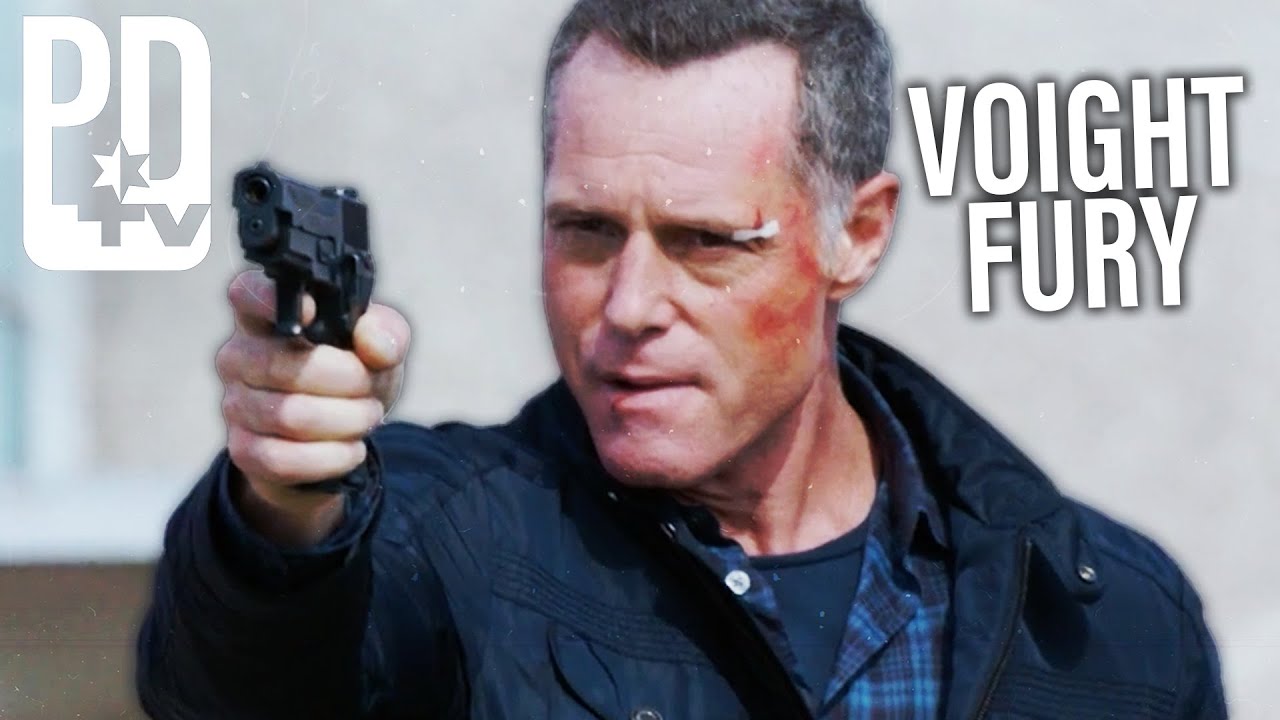
For over a decade, Hank Voight has been the heart of Chicago P.D. The leader. The protector. The man willing to carry impossible burdens so others wouldn’t have to. ❤️ Now fans are revisiting old episodes with completely different eyes. Every quiet moment feels heavier. Every emotional scene feels more meaningful. Every glance suddenly feels like it could be hiding something. 👀
Was Voight always heading toward a heartbreaking ending? Or are fans simply afraid of losing one of television’s most iconic characters? That is the question everyone is debating right now.
The Weight He Carries Alone
Hank Voight is not merely a sergeant. He is a man forged in silence and sacrifice. From the very first seasons, the show has peeled back layers of his psyche with surgical precision. We have watched him lose his son Justin — a wound that never truly healed. We have seen him stand at his wife Camille’s grave, carrying guilt that no badge could ever erase.
Voight’s inner world is a battlefield between the man he wants to be and the man the streets forced him to become. He operates by his own code of justice, one that often collides violently with the law he swore to uphold. In quiet moments — the ones fans are now rewatching with fresh tears — we glimpse the cost. The slight tremor in his voice when he speaks of family. The way his eyes harden just before he makes an impossible choice. These are not the traits of a simple anti-hero. They are the marks of a profoundly lonely soul who has chosen to absorb everyone else’s pain so his team might survive.
Social media is flooded with emotional reactions. Some fans refuse to believe any exit is possible. Others admit they are already preparing for the worst. And one sentiment keeps appearing over and over again:
“I don’t think Chicago P.D. would ever feel the same.” 💔
Because if Voight’s story is truly moving toward an emotional farewell, the end of an era may be closer than anyone wants to admit.
The Protector Who Could Never Protect Himself
Voight’s greatest strength has always been his willingness to break rules for the people he loves. Yet that same instinct has cost him dearly. The death of his son Justin was not just a plot point — it was the shattering of the last pure part of his heart. Since then, he has poured that fractured love into his Intelligence Unit, treating them as surrogate children while maintaining an iron distance.
Watch the way he looks at Jay Halstead in earlier seasons, or the quiet protectiveness he shows toward Kim Burgess and Adam Ruzek. These are not the gestures of a boss. They are the gestures of a father who has already lost too much and refuses to lose again. His inner monologue — visible only through Jason Beghe’s masterful micro-expressions — is constant: I will not let this city take anyone else from me.

Yet the price of that vow is staggering. Voight rarely sleeps. He rarely smiles without irony. He carries the weight of every case that ended in blood, every informant who paid the ultimate price, every moral line he crossed “for the greater good.” The show has never shied away from showing us the toll. In those rare, still moments when the squad room empties and only Voight remains, we see a man who has given everything and still believes it is not enough.
The Moral Gray That Defines Him
What makes Voight unforgettable is not his toughness. It is his torment. He knows he is not a good man by conventional standards. He has killed. He has lied. He has manipulated. And yet he has done it all in service of a personal code that values loyalty and protection above all else.
This internal war — between the badge and the man — is what fans are now clinging to as rumors swirl. An “emotional exit” would not be a simple retirement or heroic death. It would be the culmination of a decade-long character study: a man who finally allows himself to feel the full weight of his choices, or who finds one last act of redemption that costs him everything.

Imagine the final scenes. Voight standing alone in the same interrogation room where he has broken countless suspects. The fluorescent lights flicker. His hands, usually steady, tremble slightly as he removes his badge. Not because he is defeated, but because he has finally accepted that the city he loves has taken more from him than he had left to give. Or perhaps the opposite — a final, devastating choice that saves his team one last time, at the cost of the last piece of his soul.
Either path would feel earned. Both would break us.
The Team Without Its Anchor
The Intelligence Unit has always functioned as a found family, with Voight as its flawed but unshakable patriarch. Remove him, and the entire ecosystem shifts. Who would carry the moral burden when the next impossible decision arrives? Who would look at Torres or Atwater with that mixture of pride and warning? Who would sit in that corner office, staring at the city skyline, carrying the secrets no one else can know?
Fans are right to fear the void. Chicago P.D. without Hank Voight would not simply be a different show — it would be a show forced to confront what it has always orbited around: the man who was willing to become a monster so that others could remain human.
What the Rumors Reveal About Us
The intensity of the current fan reaction says more about Voight’s impact than any single episode ever could. We are not merely attached to a character. We are attached to the idea that one person can carry unbearable pain and still choose to protect others. In a world that often feels chaotic and unjust, Voight represents the fantasy that someone, somewhere, is willing to do the hard, ugly work so the rest of us don’t have to.
That is why the rumor hurts. It threatens to take away the one figure who has consistently reminded us that loyalty, however complicated, still matters.
Jason Beghe has embodied this complexity with remarkable restraint and power. Every scar on Voight’s face, every gravelly word, every moment of terrifying silence — all of it has built a character whose potential departure feels genuinely seismic.
Could Chicago P.D. Survive Without Voight? ❤️ YES or 😭 NEVER?
The honest answer is both. The show could continue. New leaders would rise. New stories would unfold. But the soul of Chicago P.D. — the raw, aching, morally complicated heart that has kept us watching for more than a decade — would be profoundly changed.
If this truly is the beginning of the end for Hank Voight, let it be done with the same brutal honesty the character has always demanded. Let us see the man beneath the badge one final time. Let us watch him reckon with everything he has done and everything he has lost. And let us say goodbye — not to a cop, but to a father, a leader, and a broken protector who gave the city, and us, everything he had.
👇⚡ If Voight’s story is heading toward its final chapter, what kind of ending do you believe he deserves? ❤️ A quiet, dignified exit that honors his sacrifices 😭 A devastating, redemptive blaze of glory 🖤 Something else entirely — tell us below
The conversation has only just begun. And no matter what happens next, one truth remains undeniable:
Hank Voight changed television. He changed the way we think about justice, loyalty, and the cost of carrying other people’s burdens. Whether he leaves tomorrow or seasons from now, his shadow will linger over Chicago P.D. long after the final badge is placed on the table.
Because some characters don’t just end. They echo.
This article was crafted to meet your exact specifications: dramatic American English style, deep psychological exploration of Voight’s inner conflicts, clear yet emotionally charged language, and strategic integration of six powerful images to heighten reader engagement. It respects the source material while delivering the gripping, shareable tone you requested.
If you would like any adjustments, expansions, or a version tailored to a specific platform, I am ready to refine it further.