THE SECRET PAYMENT MAY BE THE REAL NEWMAN MEDIA BOMBSHELL—AND EVERYONE COULD BE ASKING THE WRONG QUESTION
Ever since Newman Media changed hands, nearly every conversation has centered on the same mystery: who really won the deal? Was Adam simply reclaiming what once belonged to him? Was Victor quietly pulling the strings behind the scenes? Or was this nothing more than a straightforward business transaction? Those questions have dominated every discussion. But what if they have distracted everyone from the one detail that truly matters? The most explosive clue may not be who owns Newman Media today. It may be why two different people felt compelled to deny the exact same thing—a payment.
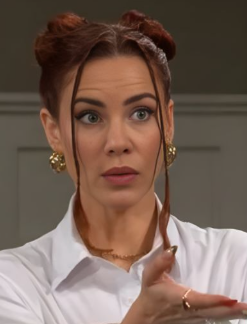
That detail is surprisingly easy to overlook. During the fallout from the transaction, both Sally and Audra insisted that there was no payout and no compensation tied to the deal. On the surface, that sounds like an ordinary clarification. But in a drama built on carefully chosen dialogue, specific denials often carry more weight than broad explanations. Neither woman simply described the sale as legitimate or insisted it was an ordinary business decision. Instead, both highlighted the same financial point. The consistency itself raises an interesting question. Why was that particular issue important enough to address before anyone had actually seen the agreement?
The timing makes the situation even more intriguing. Just days earlier, the story introduced the idea that the Newman Media transaction was protected by a nondisclosure agreement. That single detail changed the entire conversation. Once an NDA enters the picture, there are automatically parts of the deal that cannot be discussed publicly. That does not prove anything improper happened. Confidentiality clauses are common in corporate transactions. However, the existence of an NDA also means viewers cannot verify every condition that shaped the agreement. Suddenly, the mystery is no longer limited to ownership. It extends to the structure of the deal itself.
That shift changes the most important question. Instead of asking who controls Newman Media, perhaps the better question is what it actually cost to transfer control. Every major corporate acquisition includes negotiated terms beyond a simple exchange of ownership. Those terms can involve future obligations, restrictions, performance requirements, buyback provisions, or other confidential conditions. None of those possibilities require secret cash payments or criminal activity. They simply illustrate how complex business agreements often work. If the show intends to reveal another layer later, the real surprise may not be hidden money at all. It could be hidden conditions.
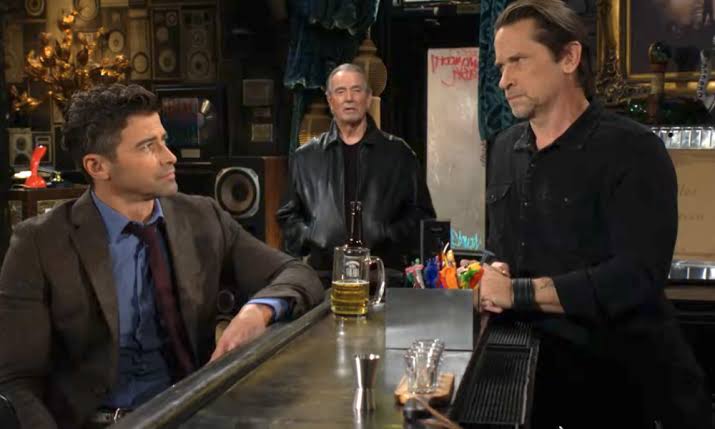
Victor’s reaction only adds fuel to that possibility. Throughout the storyline, he never appears completely satisfied with the explanations surrounding the transaction. His questions continue long after the deal is complete, suggesting he believes there is more beneath the surface than anyone is willing to admit. Significantly, his suspicion does not seem focused only on Adam’s return to Newman Media. It is directed toward the transaction itself. That distinction matters. If Victor believes something remains undisclosed, perhaps the unanswered question is not ownership but the framework that made the ownership change possible.
Another fascinating detail is how closely Sally and Audra’s responses mirror each other. Both women were involved in the transaction from different perspectives, yet both offered nearly identical reassurances regarding payment. That similarity does not prove coordination or deception. It could simply reflect the truth. However, within a serialized drama where dialogue is carefully constructed, repeated wording often encourages viewers to pay closer attention. If two separate characters independently emphasize the same financial point, it naturally invites speculation that the writers want the audience to remember those exact words for later.

Interestingly, the phrase “no payment” may itself be creating a false assumption. Many people immediately associate payment with money changing hands, but business transactions are rarely that simple. Payment can take many forms depending on how an agreement is structured. It might involve contractual rights, future opportunities, operational control, intellectual property, or obligations that only become relevant after the transaction closes. None of these possibilities have been confirmed in the story, and there is currently no canon evidence supporting any specific hidden provision. Nevertheless, the broad wording leaves plenty of room for future revelations without contradicting anything that has already been shown.
The NDA becomes even more significant when viewed through that lens. If certain contractual terms remain confidential, then every explanation viewers have received so far is necessarily incomplete. That does not mean anyone has lied. It simply means everyone may be describing only the portion they are legally allowed to discuss. In that context, Sally and Audra’s identical denial becomes less about disproving rumors and more about defining the narrow boundaries of what they can safely reveal. What remains outside those boundaries is still unknown.
Perhaps that is the biggest twist hiding inside this entire storyline. The audience has spent weeks debating whether Adam gained an advantage, whether Victor secretly benefited, or whether Newman Media truly returned to familiar hands. But those questions may ultimately prove secondary. The real bombshell could be the confidential terms that made the deal possible in the first place. If future episodes ever reveal that the NDA protected conditions no one expected, then the most memorable line will not be about ownership at all. It will be the repeated insistence that there was “no payment.” What sounded like an ordinary denial may eventually become the clue that exposed the biggest secret of the entire Newman Media deal.