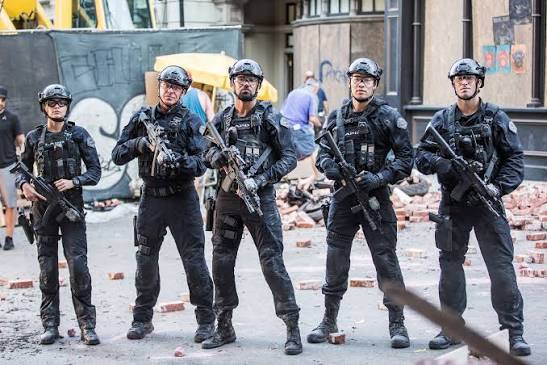
The Real Star of S.W.A.T. Was Never a Character—It Was the City Itself dt02
When people remember S.W.A.T., they often think about the squad, the missions, or the intense action that unfolded in nearly every episode.
But throughout eight seasons, another presence quietly shaped the series from beginning to end.
Los Angeles wasn’t simply where the stories took place.
It became an active participant in almost every mission.

A City That Never Felt Static
Rather than presenting Los Angeles as a generic backdrop, S.W.A.T. constantly explored different neighborhoods, cultures, businesses, and communities. One episode might unfold in the middle of a busy downtown district, while the next shifted into quieter residential areas or industrial zones with completely different challenges.
That variety made the city feel unpredictable.
Instead of watching the same locations week after week, audiences experienced a version of Los Angeles that constantly evolved, reflecting the diversity and complexity of one of the world’s largest metropolitan areas.
Every Neighborhood Told a Different Story
The setting often influenced the mission itself.
Different communities brought different challenges, different people, and different emotional stakes.
Rather than forcing every episode into the same formula, the environment naturally shaped the direction of the story, making each operation feel unique.
It also reminded viewers that policing wasn’t happening in isolation—it affected real neighborhoods filled with ordinary people trying to live their lives.
A Character Without Dialogue
Very few television dramas make a city feel alive.
S.W.A.T. accomplished that without ever needing to draw attention to it.
By allowing Los Angeles to influence the mood, pace, and atmosphere of each episode, the series created an identity that extended far beyond its main cast.
Looking back, the city wasn’t just the setting.
It was one of the show’s most important characters.